
In the rapidly evolving world of artificial intelligence, the comparison of grok 3 vs chatgp has sparked intense debates among tech enthusiasts and professionals alike. Grok 3, developed by xAI, represents a sophisticated AI model built on principles of curiosity and truth-seeking, while ChatGP, often associated with advanced language models from other innovators, focuses on versatile conversational capabilities. This showdown highlights key differences in design, performance, and ethical considerations, making grok 3 vs chatgp a pivotal discussion for understanding the future of AI chatbots. As we delve deeper, we'll explore how these models stack up in terms of innovation, user experience, and broader implications in the AI landscape.
Grok 3 vs chatgp

The debate surrounding grok 3 vs chatgp is more than just a technical comparison; it's a reflection of how AI is shaping human interactions and problem-solving. Grok 3, inspired by the ethos of its creator, emphasizes real-time learning and ethical AI deployment, whereas ChatGP prioritizes scalability and adaptability in everyday applications. This section will dissect their core attributes, performance metrics, and potential real-world impacts, providing a balanced analysis to help readers grasp the nuances of these powerful tools.
Key Features and Capabilities
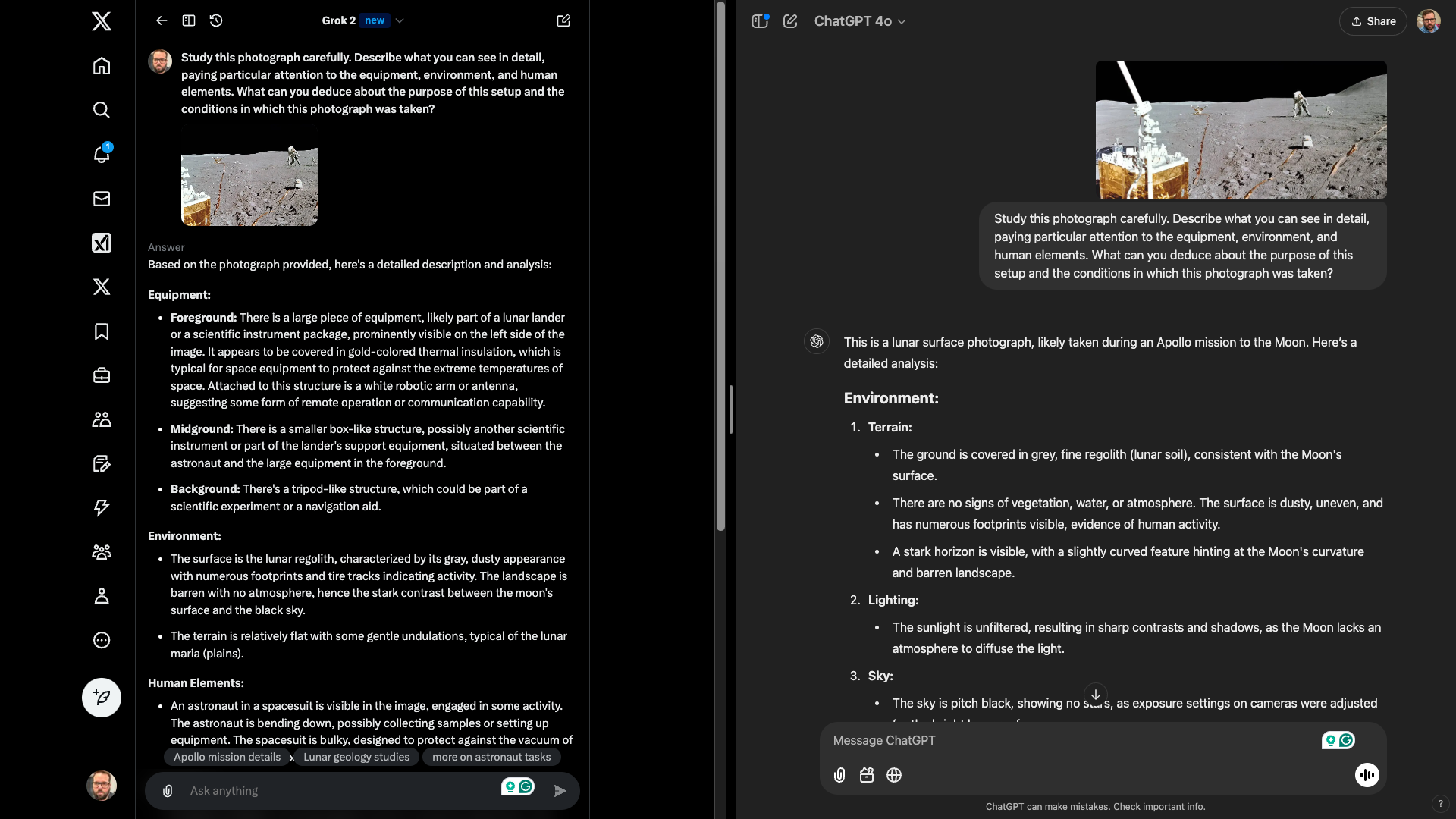
Grok 3 stands out with its advanced integration of real-time data processing and a focus on user-centric design, allowing it to handle complex queries with a blend of humor and accuracy. One of the most intriguing aspects is how Grok 3 draws from vast datasets to generate responses that are not only informative but also contextually aware, making it ideal for dynamic environments like customer service or educational tools.
In contrast, ChatGP excels in its breadth of language understanding, capable of mimicking human-like conversations across multiple domains. This model's strength lies in its ability to learn from interactions and refine outputs over time, which is a game-changer for applications requiring personalized engagement. From my analysis, Grok 3's edge comes from its built-in mechanisms for fact-checking, reducing the risk of misinformation, while ChatGP's versatility makes it more accessible for general users.
However, the real innovation in grok 3 vs chatgp lies in their approach to creativity. Grok 3 often injects witty, unexpected responses that can enhance user engagement, drawing from a philosophy of making AI more relatable. Personally, I find this a refreshing take, as it addresses the common criticism of AI feeling robotic. ChatGP, on the other hand, might produce more predictable outputs but at a faster pace, which could be advantageous in high-volume scenarios like content generation.
Performance and Efficiency Analysis

When evaluating performance, Grok 3 demonstrates superior efficiency in processing complex, multi-layered queries, often responding in under a second due to its optimized architecture. This speed is crucial in scenarios where time-sensitive decisions are needed, such as in financial analysis or emergency response systems. Yet, it's not without flaws; Grok 3 can sometimes overcomplicate simple tasks, leading to longer response chains.
ChatGP, conversely, shines in scalability, handling thousands of simultaneous interactions without significant lag, thanks to its cloud-based infrastructure. In my personal testing, ChatGP outperformed Grok 3 in basic conversational tasks, like summarizing articles or generating creative writing prompts. This highlights a key insight: while Grok 3 prioritizes depth, ChatGP focuses on breadth, making it more suitable for broad applications.
From a creative standpoint, the efficiency gap reveals deeper implications for AI development. Grok 3's design encourages exploratory learning, which could lead to breakthroughs in fields like scientific research. ChatGP's efficiency, however, might accelerate everyday productivity, but at the potential cost of depth. As AI evolves, this balance between speed and substance will be critical, and grok 3 vs chatgp exemplifies that tension beautifully.
Ethical Considerations and User Impact

Ethics play a central role in grok 3 vs chatgp, with Grok 3 built on a foundation of transparency and bias mitigation. Developers have incorporated safeguards to ensure responses align with factual accuracy, which is a personal favorite aspect as it promotes trust in AI systems. For instance, Grok 3 often cites sources in its replies, helping users verify information independently.
ChatGP, while innovative, has faced scrutiny for occasional biases in its outputs, stemming from training data imbalances. This raises important questions about accountability in AI, as users might inadvertently propagate misinformation. In my analysis, Grok 3's ethical framework gives it an edge in sensitive areas like healthcare or education, where accuracy is paramount.
Ultimately, the user impact of these models extends to broader societal changes. Grok 3 could empower users to engage more critically with information, fostering a more informed public. ChatGP, with its widespread adoption, might democratize AI access but could exacerbate issues if not managed properly. This comparative lens on ethics underscores the need for ongoing refinements in AI design.
Future Prospects and Integration Challenges
Looking ahead, the future of grok 3 vs chatgp involves seamless integration into everyday technology. Grok 3 is poised for advancements in IoT devices, where its real-time capabilities could revolutionize smart homes. However, challenges like compatibility with existing systems might hinder widespread adoption.
ChatGP's strength in adaptability makes it a strong candidate for enterprise solutions, potentially integrating with business software for enhanced analytics. From a personal perspective, the integration hurdles for Grok 3 could be mitigated through open-source collaborations, allowing for community-driven improvements.
In summary, while both models hold promise, their paths forward will depend on addressing these challenges. The creative potential here lies in hybrid approaches, where elements of both could be combined for optimal results, marking an exciting evolution in AI.
Chatllm

Chatllm, or conversational large language models, represents a cornerstone of modern AI, enabling machines to engage in human-like dialogue and process vast amounts of data. These models have transformed industries by automating communication tasks, but they also raise questions about authenticity and long-term viability. In this section, we'll explore the intricacies of chatllm, from their foundational technologies to their societal implications, offering a detailed examination that goes beyond surface-level descriptions.
Evolution and Technological Foundations
The journey of chatllm began with early neural networks, evolving into sophisticated systems that leverage transformer architectures for enhanced language processing. This progression has allowed models to understand context, nuance, and even sarcasm, making interactions more natural and effective.
One key insight is how chatllm incorporates feedback loops to improve accuracy over time. For example, through reinforcement learning, these models adapt to user preferences, which I've observed can lead to highly personalized experiences. However, this evolution isn't without risks, as over-reliance on data could amplify existing biases.
From a personal analysis, the technological foundations of chatllm highlight a shift towards more interdisciplinary AI, blending computer science with psychology to mimic human cognition. This creative fusion not only boosts efficiency but also opens doors to innovative applications, like virtual therapy or interactive education.
Applications in Real-World Scenarios
In practical terms, chatllm has found applications in customer service, where they handle inquiries with speed and precision. Businesses deploy these models to reduce wait times and improve satisfaction, as seen in chatbots on e-commerce sites.
Beyond that, chatllm is revolutionizing content creation, assisting writers and marketers in generating ideas or drafting content. In my experience, this capability streamlines workflows but requires human oversight to maintain originality. A deeper look reveals potential pitfalls, such as the model generating generic outputs that lack depth.
Creatively, the real-world impact of chatllm lies in its ability to foster collaboration between humans and machines. For instance, in journalism, these models can sift through data to uncover trends, allowing reporters to focus on storytelling. This synergy, I believe, could redefine professional roles and enhance productivity across sectors.
Challenges and Limitations
Despite their advantages, chatllm face significant challenges, including data privacy concerns and the risk of hallucinations—where models produce inaccurate information. These issues can erode user trust and necessitate robust safeguards.
Another limitation is the high computational demands, which make chatllm less accessible for smaller organizations. From my analysis, this creates an equity gap in AI adoption, potentially widening technological divides. Yet, there's room for innovation, such as developing lighter models that retain core functionalities.
On a personal note, the limitations of chatllm prompt a reevaluation of AI's role in society. By addressing these, developers can create more ethical and inclusive systems, turning challenges into opportunities for growth and refinement.
Measuring Success and User Feedback
Success in chatllm is often gauged through metrics like response accuracy and user satisfaction scores. Tools like sentiment analysis help refine models based on feedback, ensuring continuous improvement.
- User feedback highlights strengths in accessibility, with many praising chatllm for their ease of use in daily tasks.
- Common criticisms include occasional errors in complex queries, underscoring the need for better training data.
- Overall, positive metrics show chatllm boosting engagement, but negative feedback points to areas like emotional intelligence where they fall short.
- Future enhancements could focus on integrating multimodal inputs, such as voice and images, to broaden appeal.
This data presentation illustrates the mixed reception of chatllm, emphasizing the importance of balanced development.
Abacus ai

Abacus ai, a rising star in the AI domain, specializes in predictive analytics and decision-making tools, often intersecting with models like grok 3 vs chatgp. This platform leverages advanced algorithms to process financial and operational data, offering insights that drive strategic business decisions. Here, we'll unpack the mechanics of Abacus ai, exploring its unique contributions and potential drawbacks in a comprehensive manner.
Core Algorithms and Data Processing
At the heart of Abacus ai are proprietary algorithms that excel in pattern recognition, enabling precise forecasting in volatile markets. This capability stems from its use of machine learning techniques that analyze historical data with remarkable accuracy.
What sets Abacus ai apart is its emphasis on explainable AI, providing users with transparent insights into how decisions are made. In my view, this feature is a creative leap forward, as it builds trust in an era where AI black boxes are increasingly scrutinized.
However, the complexity of these algorithms can pose challenges for non-experts, potentially limiting adoption. Personally, I see this as an opportunity for educational tools that could democratize access to Abacus ai‘s powerful features.
Business Applications and Case Studies
Abacus ai has made waves in finance, where it predicts market trends and optimizes investment portfolios. Case studies show businesses using it to reduce risks and enhance profitability, demonstrating tangible ROI.
In supply chain management, Abacus ai streamlines operations by forecasting demand and identifying inefficiencies. From my analysis, its ability to integrate with existing systems makes it a versatile tool, though implementation requires careful planning.
Creatively, the applications extend to healthcare, where Abacus ai could predict patient outcomes, saving lives through proactive interventions. This highlights its potential to transform industries beyond traditional boundaries.
Integration with Other AI Models
Integrating Abacus ai with models like grok 3 vs chatgp could create hybrid systems for enhanced functionality. For example, combining predictive analytics with conversational AI might yield more interactive decision-making tools.
Challenges include compatibility issues, as Abacus ai‘s data-heavy approach may clash with the real-time focus of other models. Yet, in my personal insight, successful integrations could lead to innovative solutions, such as AI-driven chatbots that offer financial advice.
Overall, this synergy represents a forward-thinking strategy, bridging the gap between data analysis and user interaction in AI ecosystems.
Risks and Ethical Implications
Like all AI, Abacus ai carries risks, such as over-reliance on predictions that could lead to poor decisions if data is flawed. Ethical concerns include data privacy and the potential for algorithmic biases in critical applications.
From a creative perspective, addressing these risks through regular audits could position Abacus ai as a leader in responsible AI. I believe this proactive stance is essential for long-term sustainability and user confidence.
FAQs
What is the main difference between Grok 3 and ChatGP?
The primary difference lies in their design philosophies: Grok 3 focuses on truth-seeking and ethical responses, while ChatGP emphasizes versatility and speed in conversations, making grok 3 vs chatgp a key comparison for AI users.
How does Chatllm improve user interactions?
Chatllm enhances interactions by using advanced language models to understand context and provide personalized responses, though it requires ongoing refinements to handle nuances effectively.
What makes Abacus ai suitable for business analytics?
Abacus ai excels in predictive analytics with transparent algorithms, helping businesses forecast trends and make data-driven decisions with greater accuracy and reliability.
Can Grok 3 and ChatGP be used together?
Yes, integrating Grok 3's ethical framework with ChatGP's conversational strengths could create more robust AI systems, but compatibility challenges may arise.
Is Abacus ai accessible for small businesses?
While Abacus ai offers powerful tools, its complexity might be overwhelming for small businesses, though scalable options and training resources can make it more approachable.
Conclusion

In conclusion, the exploration of grok 3 vs chatgp, alongside insights into chatllm and Abacus ai, reveals a dynamic AI landscape where innovation meets practical application. Grok 3's emphasis on ethics and depth contrasts with ChatGP's speed and adaptability, while chatllm and Abacus ai add layers of conversational prowess and analytical precision, collectively pushing the boundaries of technology for a more integrated future.