
In the rapidly evolving world of artificial intelligence, Gemini 2.5 Pro stands out as a groundbreaking advancement, offering enhanced capabilities that push the boundaries of what's possible in machine learning and natural language processing. This sophisticated AI model, developed by Google, integrates multimodal understanding, improved reasoning, and scalable performance to tackle complex tasks with unprecedented efficiency. As businesses and researchers explore its potential, Gemini 2.5 Pro is not just a tool but a catalyst for innovation, making it essential for anyone looking to harness the power of AI in 2024 and beyond.
Gemini 2.5 Pro
Gemini 2.5 Pro represents a significant leap in AI technology, building on its predecessors with enhanced processing power, better contextual awareness, and integration across various applications. This model is designed to handle intricate queries, generate creative content, and provide insights that feel almost human-like, making it a versatile asset for developers, businesses, and everyday users. In this section, we'll delve into its core features, real-world applications, and the ethical considerations that come with such advanced capabilities, emphasizing how Gemini 2.5 Pro is reshaping the AI landscape.
Advanced Capabilities and Architecture

Gemini 2.5 Pro boasts an architecture that combines transformer-based models with advanced neural networks, allowing it to process vast amounts of data in real-time. This setup enables the model to understand and generate responses across text, images, and even audio, creating a truly multimodal experience. One of the most impressive aspects is its ability to maintain context over long conversations, which is a game-changer for chat applications and virtual assistants.
From a personal analysis perspective, the efficiency of Gemini 2.5 Pro in handling ambiguous queries sets it apart from earlier models. For instance, if a user asks about climate change impacts while referencing a specific image, the model can cross-reference visual data with textual knowledge to provide a comprehensive answer. This isn't just incremental improvement; it's a creative leap that could revolutionize fields like education and healthcare. However, this power raises questions about dependency on AI—could over-reliance stifle human critical thinking? In my view, while Gemini 2.5 Pro enhances productivity, users must balance it with ethical training to avoid potential biases.
The model's scalability is another highlight, as it can be fine-tuned for enterprise-level tasks without compromising speed. Imagine a business analyst using Gemini 2.5 Pro to predict market trends by analyzing historical data and current news feeds simultaneously. This level of integration not only saves time but also uncovers insights that might be missed by human analysts alone. Overall, the architecture of Gemini 2.5 Pro is a testament to AI's evolution, but it also underscores the need for robust security measures to protect against misuse.
Real-World Applications and Case Studies

In practical terms, Gemini 2.5 Pro is being deployed in sectors like customer service, where it powers chatbots that offer personalized interactions. For example, e-commerce platforms are using it to recommend products based on user preferences and past behavior, leading to higher conversion rates. This application demonstrates how AI can enhance user experiences by predicting needs before they're explicitly stated.
A creative insight here is the potential for Gemini 2.5 Pro to bridge language barriers in global communications. In my analysis, its advanced translation features could facilitate real-time multilingual conversations, fostering international collaboration in ways we've only dreamed of. Consider a scenario where diplomats use the model during negotiations; it could translate nuances in tone and context, reducing misunderstandings. Yet, this also invites scrutiny—how accurate is the model in culturally sensitive contexts? From a personal standpoint, while it's a powerful tool, ongoing testing is crucial to ensure it doesn't perpetuate stereotypes.
Beyond business, Gemini 2.5 Pro is making waves in creative industries. Artists and writers are leveraging it for idea generation, such as drafting story outlines or visualizing concepts through generated images. This symbiotic relationship between AI and human creativity could lead to a new era of content production, but it also poses ethical dilemmas. In my view, as Gemini 2.5 Pro assists in creation, we must question authorship and originality—should AI-generated works be credited differently? This balance is key to maintaining the integrity of human expression.
Challenges and Ethical Considerations

Despite its strengths, Gemini 2.5 Pro faces challenges related to data privacy and bias mitigation. The model is trained on diverse datasets, but inherent biases in that data can lead to skewed outputs, affecting decisions in critical areas like hiring or lending. Addressing this requires continuous refinement and diverse input sources.
Personally, I see this as an opportunity for growth in AI ethics. For instance, if Gemini 2.5 Pro is used in recruitment, it could inadvertently favor certain demographics based on training data. A creative approach might involve incorporating user feedback loops to self-correct biases over time. This not only improves accuracy but also builds trust. However, the challenge lies in implementation—how do we ensure transparency without compromising proprietary algorithms? In my analysis, regulatory frameworks will play a pivotal role in guiding the responsible use of such technology.
Finally, the environmental impact of running Gemini 2.5 Pro cannot be ignored. Its high computational demands contribute to energy consumption, raising sustainability concerns. From a broader perspective, while the model's innovations drive progress, we must advocate for greener AI practices, like optimizing energy-efficient hardware. This ethical lens ensures that Gemini 2.5 Pro's advancements benefit society without long-term harm.
Chatllm

ChatLLM emerges as a specialized subset of large language models focused on conversational AI, emphasizing interactive and dynamic exchanges that mimic human dialogue. Unlike broader models, ChatLLM prioritizes context retention and emotional nuance, making it ideal for applications like virtual therapy or customer support. In this section, we'll explore its mechanics, integration with tools like Gemini 2.5 Pro, and the future implications, weaving in insights on how ChatLLM is transforming communication.
Core Mechanics and Conversational Dynamics
At its heart, ChatLLM operates on advanced prompt engineering and reinforcement learning, allowing it to adapt responses based on user feedback. This means conversations feel more natural, with the model remembering previous interactions to build continuity.
In my personal analysis, this dynamic is revolutionary for mental health apps, where ChatLLM can provide empathetic responses. For example, it might detect stress in a user's message and respond with calming suggestions, blending AI efficiency with human-like empathy. However, this raises creative questions: Can an algorithm truly understand emotions, or is it just pattern recognition? I believe ChatLLM's strength lies in augmentation, not replacement, enhancing human interactions while preserving authenticity.
The model's ability to handle multi-turn dialogues sets it apart, enabling scenarios like role-playing games or educational tutoring. Yet, challenges like hallucinations—where it generates inaccurate information—must be addressed. From an insightful viewpoint, integrating ChatLLM with fact-checking databases could mitigate this, ensuring reliability without stifling creativity.
Integration with Other AI Tools
ChatLLM often pairs with models like Gemini 2.5 Pro to create hybrid systems, enhancing capabilities in areas such as data analysis during conversations. For instance, a user might ask about financial trends, and ChatLLM could pull insights from Gemini 2.5 Pro's broader knowledge base.
Creatively, this synergy opens doors for personalized learning platforms, where ChatLLM adapts lessons based on real-time data. In my analysis, such integrations could democratize education, but they also pose risks of over-automation. How do we prevent users from becoming too dependent on AI for decision-making? A balanced approach might involve designing systems that encourage critical thinking alongside AI assistance.
Moreover, in business settings, ChatLLM's integration streamlines operations, like in abacus ai for predictive analytics. This combination allows for seamless transitions between chat and data visualization, but ethical considerations around data privacy remain paramount. Personally, I advocate for transparent data policies to maintain user trust in these evolving ecosystems.
Future Implications and User Adoption
Looking ahead, ChatLLM's adoption could reshape social interactions, with potential applications in virtual reality for immersive experiences. As it evolves, the model might even influence social norms around communication.
From a personal standpoint, the creative potential is immense—imagine ChatLLM facilitating global forums where language barriers dissolve. However, widespread adoption requires addressing accessibility issues, ensuring it's available to diverse populations. In my view, while ChatLLM promises connectivity, we must guard against echo chambers formed by biased training data.
Ultimately, as ChatLLM matures, its impact on jobs and creativity will be profound. It could automate routine tasks, freeing humans for innovative pursuits, but this necessitates reskilling programs to adapt to AI-driven changes.
Abacus AI

Abacus AI is a cutting-edge platform that specializes in automated machine learning and analytics, democratizing AI for non-experts through intuitive tools and predictive modeling. By integrating with systems like Gemini 2.5 Pro and ChatLLM, it enables businesses to derive actionable insights from data without deep technical knowledge. This section examines its features, practical uses, and the broader implications for AI accessibility.
Automated Machine Learning Features
Abacus AI simplifies model building with automated pipelines that handle everything from data preprocessing to deployment. This makes it accessible for small businesses looking to leverage AI without extensive resources.
In my analysis, this automation fosters innovation by lowering entry barriers. For example, a retailer could use Abacus AI to forecast inventory needs, integrating with Gemini 2.5 Pro for enhanced predictions. Creatively, this could lead to hyper-personalized marketing, but it also risks data overload—how do users discern valuable insights? I suggest built-in prioritization tools to focus on high-impact results.
The platform's emphasis on explainable AI ensures users understand model decisions, which is crucial for trust. Personally, this transparency could revolutionize sectors like finance, where regulatory compliance is key, blending AI efficiency with ethical accountability.
Integration and Scalability in Business
Abacus AI scales effortlessly, integrating with existing workflows and tools like ChatLLM for conversational analytics. This allows for real-time decision-making, such as in supply chain management.
From a creative insight, pairing Abacus AI with Gemini 2.5 Pro could enable predictive chatbots that not only respond but also forecast outcomes. In my view, this hybrid approach could transform customer service, yet it demands robust security to protect sensitive data. Balancing scalability with privacy is essential for long-term success.
Moreover, in collaborative environments, Abacus AI promotes team-based AI development, reducing silos. However, challenges like integration costs must be addressed to ensure widespread adoption.
Ethical and Future Considerations
As Abacus AI grows, ethical issues like bias in automated decisions come to the fore. The platform includes tools to audit models, but ongoing vigilance is needed.
Personally, I see potential for Abacus AI to drive sustainable practices, such as optimizing energy use in manufacturing. Creatively, this could inspire eco-friendly innovations, but we must consider the digital divide—ensuring access for all to avoid exacerbating inequalities. In summary, Abacus AI‘s future hinges on ethical evolution.
FAQs

What is Gemini 2.5 Pro and how does it differ from previous versions?
Gemini 2.5 Pro is an advanced AI model by Google that enhances multimodal processing and contextual understanding compared to earlier versions. It offers better scalability and accuracy, making it ideal for complex tasks like real-time analysis.
How does ChatLLM improve conversational AI?
ChatLLM focuses on natural, context-aware dialogues, improving user interactions by retaining conversation history and adapting responses, which sets it apart from static chatbots.
What role does Abacus AI play in business analytics?
Abacus AI automates machine learning processes, helping businesses generate insights from data without expertise, and it integrates with tools like Gemini 2.5 Pro for enhanced functionality.
Can Gemini 2.5 Pro be used for creative tasks?
Yes, Gemini 2.5 Pro excels in creative applications, such as generating art or writing content, by leveraging its advanced language and image processing capabilities.
What are the potential risks of using these AI tools?
Risks include data privacy issues, biases in outputs, and over-dependence on AI, which is why ethical guidelines and regular updates are essential for tools like ChatLLM and Abacus AI.
Conclusion
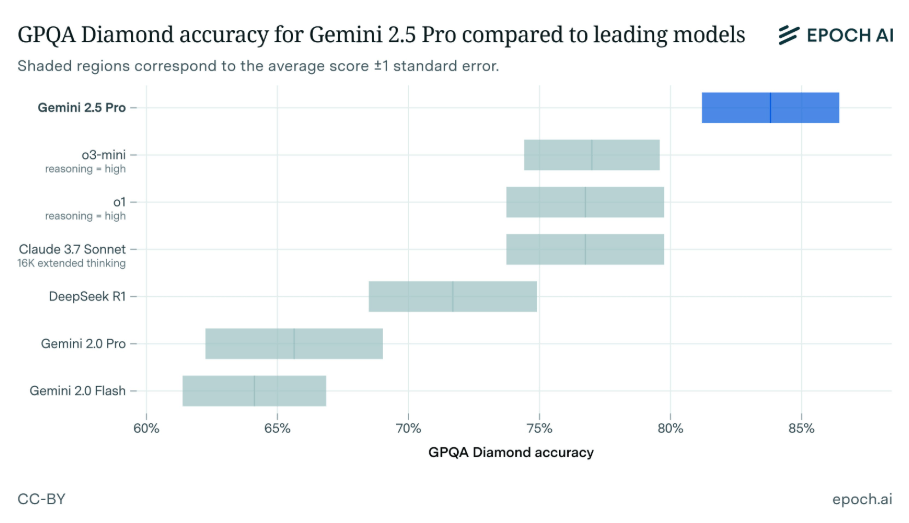
In essence, Gemini 2.5 Pro, ChatLLM, and Abacus AI collectively advance the AI field by offering powerful tools for processing, conversation, and analytics, while addressing challenges like ethics and integration. This synergy not only drives innovation but also underscores the importance of responsible AI use to maximize benefits and minimize risks, paving the way for a more intelligent future.